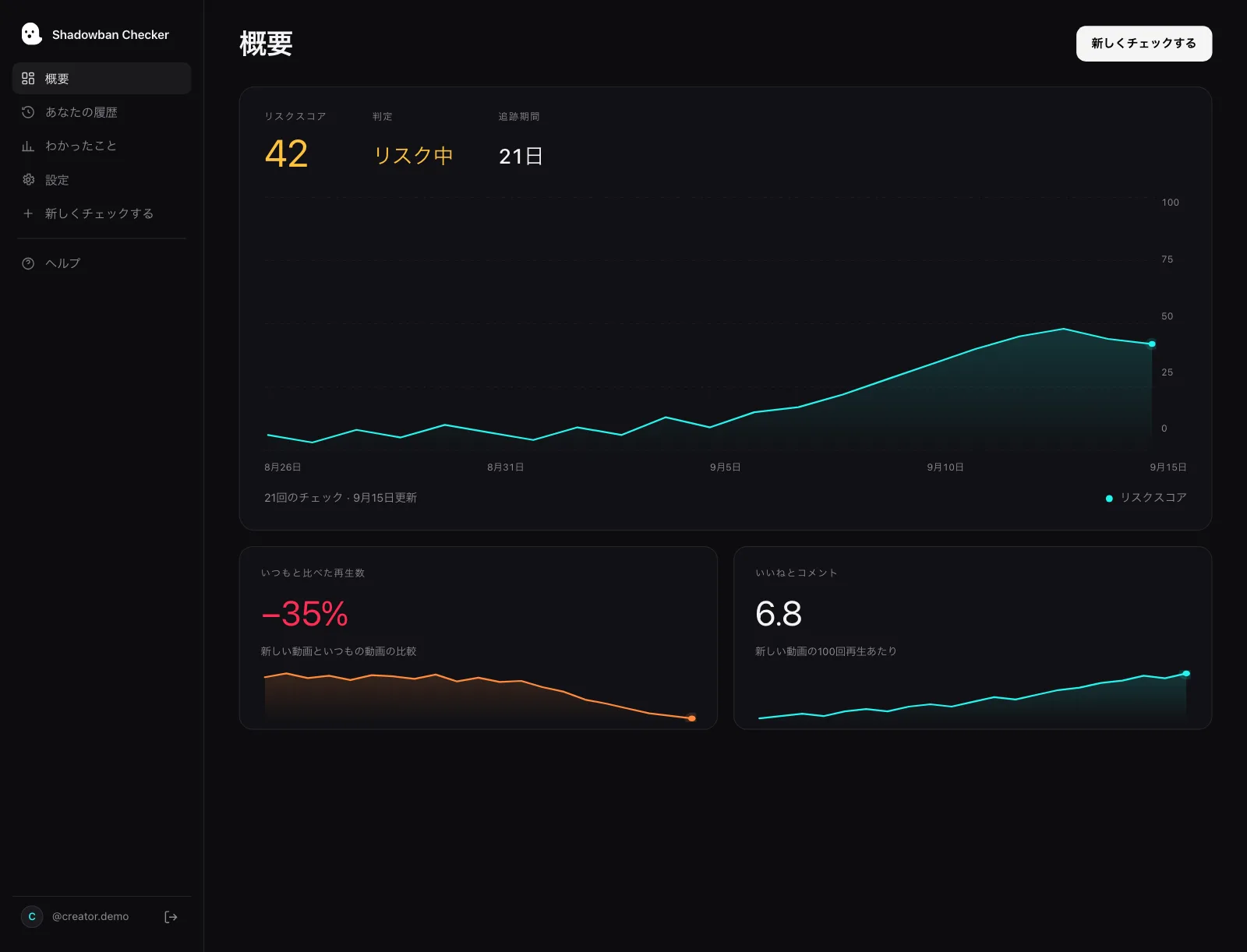
How to Tell If Your TikTok Reach Is Limited: The Real Signals
There’s one signal TikTok actually gives you, and a handful of patterns worth watching. Here’s how to separate a real reach limit from normal ups and downs — without the myths.
What is the one signal TikTok gives you?
Most “how to know if you’re shadowbanned” advice skips the only authoritative source: TikTok itself. TikTok’s For You feed standards say creators can check TikTok’s analytics to see how their videos are performing, “including if there were any made ineligible for recommendation.” Its Enforcement guidelines are just as direct:
If your content is made ineligible for the FYF or otherwise restricted, this information will appear in the TikTok analytics tool.TikTok Community Guidelines — Enforcement
TikTok’s Creator Academy adds a detail: if a video isn’t eligible for the For You feed, a warning bar appears at the top of the Performance tab for that video. That makes analytics your starting point, not third-party “shadowban testers.” Open a specific video’s performance and look at how much of its traffic came from the For You feed versus other sources (profile, following, search). A near-total absence of For You traffic on a type of video that normally gets it is the most concrete pattern you can read yourself.
Which reach patterns are worth watching?
When the For You feed stops recommending a video, what you usually see is a reach drop that breaks from your own baseline. In our experience reading creators’ analytics, a few patterns tend to travel together (these are our heuristics, not TikTok rules):
- A sustained cliff. Recent posts land well below your typical median views, not just a little under. One quiet video is noise; a run of them is a pattern.
- Follower engagement holds, For You traffic falls. If likes and comments from people who already follow you look normal but For You traffic collapses, the gap points at lost recommendations rather than weak content.
- It’s specific, not global. Because ineligibility usually attaches to specific content, the drop may hit certain videos (say, reposts or a particular format) while others perform normally.
None of these is proof by itself. They’re the difference between “worth investigating” and “probably normal variance.” Compare recent reach against your normal, using the median rather than your single best video, so one viral outlier doesn’t distort the baseline.
Does search visibility tell you anything?
Here’s a nuance the myths get wrong. TikTok says: “Even if a video doesn’t make it to the FYF, people may still find it through search or by going to a creator's account.” So the old “search your username from another account” test is unreliable — being findable in search does not prove a video is eligible for the For You feed, because search and the For You feed are different surfaces.
What’s more useful is comparing a specific video’s For You traffic in analytics with whether it still shows up in search. Invisible in the feed but still present in search is consistent with FYF ineligibility rather than a removal. (Search has its own rules too — see why people can’t find you in search.)
What is NOT a reliable signal?
Plenty of widely-shared “symptoms” don’t hold up against what TikTok actually documents.
| Claimed symptom | Why it’s unreliable |
|---|---|
| “One video flopped, so I’m banned.” | TikTok says a video without many views doesn’t necessarily mean it broke a rule or wasn’t recommended. Single posts vary a lot. |
| “I can’t find myself in search.” | Search is a separate surface; ineligible content can still appear in search, and search results differ from person to person. |
| “My follower count stopped growing.” | Growth plateaus for countless reasons unrelated to feed eligibility. |
| “A shadowban checker site said so.” | No outside tool can see TikTok’s internal decisions. TikTok’s own analytics is the authoritative source; tools can only estimate from outcomes. |
Being skeptical here matters: if you misread normal variance as a ban, you’ll chase fixes that do nothing and possibly delete good content out of panic.
How do you confirm a reach limit?
Put the signals together instead of relying on any one:
- Check TikTok analytics first for the ineligibility warning and the For You traffic share on the affected videos.
- Check Account status for removals, strikes or restrictions — see how to check your account status.
- Compare recent reach to your median baseline, not your best post. A sustained drop — not a single dip — is the signal.
- Look for the follower-vs-For You split: steady engagement from followers alongside collapsed For You traffic.
If you’d rather have the comparison done for you: Shadowban Checker is an independent, read-only TikTok reach-analytics tool for creators. It connects to your own account through TikTok’s official login and API and estimates whether your reach is being limited — an honest estimate, not an official TikTok status. It reads your recent videos’ stats and returns a 0–100 risk score with a plain-language read — reach versus your baseline, engagement-rate patterns, and hashtags our heuristic flags as spammy or off-topic. Try a free check. For the underlying policy, see what TikTok officially says about shadowbans and the For You feed eligibility standards.
Questions, answered.
What’s the most reliable way to know if I’m shadowbanned?
TikTok’s own analytics. TikTok says restrictions and For You feed ineligibility “will appear in the TikTok analytics tool,” and Creator Academy describes a warning bar on the affected video’s Performance tab. That first-party flag beats any third-party “shadowban tester.”
If I can still find my videos in search, am I fine?
Not necessarily. TikTok says that even if a video doesn’t make it to the For You feed, people may still find it through search or by going to your account. Search visibility and For You recommendations are separate — being in search doesn’t rule out FYF ineligibility.
How big does a reach drop have to be to matter?
There’s no official threshold. The useful test is your own baseline: compare recent reach to your median (not your best video), and look for a sustained drop across several posts rather than one quiet upload.
Do third-party shadowban checkers work?
They can’t see TikTok’s internal decisions, so they can’t confirm a “shadowban.” A tool like Shadowban Checker, which connects to your own account through TikTok’s official login, can estimate whether your reach looks limited against your baseline — but the authoritative signal is TikTok’s analytics.
Can just one hashtag get a video limited?
TikTok publishes no banned-hashtag list. Hashtags are part of the video information its recommendation system uses, but eligibility is about the content: a tag can’t make ineligible content eligible, and spammy or unrelated tags don’t help. We treat hashtag risk as a heuristic, not an official rule.
Sources
- TikTok Community Guidelines — For You feed Eligibility Standards
- TikTok Community Guidelines — Enforcement (public interest exceptions, detection, notice and appeals)
- TikTok Creator Academy — Moderation and Appeals
- TikTok Creator Academy — Why is your video not getting recommended on the For You feed?
- TikTok Newsroom — How TikTok recommends videos #ForYou (June 2020)
Statements about TikTok’s policies are drawn from these primary sources and quotes are verbatim. Where TikTok has no official statement, or where we describe our own heuristics, the text says so.
More on your reach.
How to Read Your TikTok Analytics for Reach (Traffic Sources Explained)
Your own TikTok analytics is the most authoritative first-party read on reach. Learn where the data lives, what each traffic source means, where TikTok shows For You feed ineligibility, and the pattern consistent with limited recommendation.
TikTok Shadowban Checker: How They Actually Work
Most “shadowban checkers” just guess from your username. Here’s how they actually work, what they can and can’t tell you, and how analyzing your own video data gives an honest reach estimate — not an official status TikTok never issues.

TikTok LIVE Shadowban: Why Your Lives Get No Viewers
There is no documented “LIVE shadowban.” Empty LIVEs usually trace to eligibility, timing, audience size, or a documented LIVE restriction. Here is what TikTok’s guidelines actually say, and how to tell which one you are hitting.